

Revenue accounts show money made from business activities and have a credit balance. This means increases in revenue boost Accounting Security equity through credits. Meanwhile, expense accounts reflect costs in making revenue, typically having a debit balance. Recording an expense as a debit shows its reducing effect on equity.

How do we find retained earnings?

A careful look at each transaction helps decide what to record in the ledger. The increase in inventory, an asset, is a debit because that’s its normal balance for inventory. On the other hand, the cash account decreases because of balance sheet this purchase, so it gets credited. In contrast, liability and equity accounts have a credit balance. Liabilities are what a company owes, like Accounts Payable and Notes Payable, and rise with credits.
- Yes, the income summary is a temporary account used to summarize revenues and expenses for a specific period before transferring the net income or net loss to the retained earnings account.
- By doing so, the income summary account displays the net results of the company for a financial period.
- Temporary, or nominal accounts, are measured periodically.
- Debit simply means on the left side of the equation, whereas credit means on the right hand side of the equation as summarized in the table below.
- The normal account balance for many accounts are noted in the following exhibit.
What are Closing Entries?

Income and expenses are closed to a temporary clearing account, usually Income Summary. Afterwards, withdrawal or dividend accounts are also closed to the capital account. To close expenses, we simply credit the expense accounts and debit Income Summary. A contra account is one which is offset against another account.
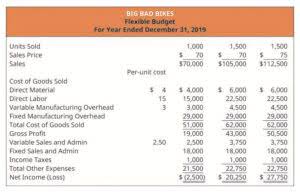
Description of the Income Summary account
This shapes the financial story of both personal and business finances. In a corporation, the amount in the income summary jumps to the balance sheet. It increases — or in the case of a net loss, decreases — retained earnings. However, that’s not the case for other business structures.
Limitations of Income summary account
- For example, the expenses are transferred to the debit side of the income summary while the revenues are transferred to the credit side of the income summary.
- In this blog, we will discuss the income summary account in detail and understand how to calculate it with some real-world examples.
- Let us understand the advantages of passing income summary closing entries for an organization or an individual through the points below.
- Since 2014, she has helped over one million students succeed in their accounting classes.
- Temporary accounts include all revenue and expense accounts, and also withdrawal accounts of owner/s in the case of sole proprietorships and partnerships (dividends for corporations).
- Total expenses are deducted from total revenues to calculate the net income formula.
With its intuitive interface and powerful functionality, Try using Brixx to stay on top of your finances and manage your growth. This chart is useful as a quick reference to determine whether an increase or decrease in a particular type of account should be recorded as a debit or a credit. Write a memo to the CEO, to offer your response to the requestto skip the closing entries for year 20X1. LO 5.2Identify which of the following accountswould be listed on the company’s Post-Closing Trial Balance. LO 5.1Identify whether each of the followingaccounts are nominal/temporary or real/permanent. LO 5.2Identify which of the following accountswould not be listed on the company’sPost-Closing Trial Balance.
- This serves as an excellent way for businesses to keep their financial records organized and start fresh each year.
- After these transactions, your Cash account has a balance of $8,000 ($10,000 – $2,000), and your Equipment account has a balance of $2,000.
- The entries that transfer the owners’ capital account’s balances of revenue, expense, and drawing accounts.
- In accounting, debits and credits are the fundamental building blocks in a double-entry accounting system.
- When doing closing entries, try to remember why you are doing them and connect them to the financial statements.
- The balance of the Income Summary account is the net income or net loss (previously reported on the income statement) and is then transferred to the owner’s Capital account (or Retained Earnings account).
- Despite the fact that both provide insights into the financial health of an organization or an individual, the former is a temporary account and the latter is a permanent account.
Because it increases capital, income has a normal credit balance. Expenses and withdrawals, on the other hand, reduce capital, so debit balances are usually present. Close the revenue accounts to Income Summary in the following order. The purpose of closing entries is to prepare the temporary accounts for the next accounting period. In other words, the income and expense accounts are « restarted ».
What is the balance in the income summary account before it is closed for the period?
It keeps the company’s financials accurate and makes sure the balance sheet is correct. We will use the 3-steps process to close the revenue and expense accounts before closing the income summary account. Before it is closed to retained earnings, the income summary account balance is equal to net income because revenues and expenses are closed into income summary. You should not include income statement accounts such as the revenue and operating expense accounts. Other accounts such as tax accounts, interest and donations do not belong on a post-closing trial balance report. The income summary entries are the total expenses and total income from your company’s income statement.
- Expense accounts are the costs of doing business for a company.
- We follow ethical journalism practices, which includes presenting unbiased information and citing reliable, attributed resources.
- To close expenses, we simply credit the expense accounts and debit Income Summary.
- Each of the accounts in a trial balance extracted from the bookkeeping ledgers will either show a debit or a credit balance.
Liabilities, on the other hand, rise with credits and fall with debits. It impacts a company’s operational costs, profitability, and bottom line. Debits and credits shape our financial standings in reports like the balance sheet and income statement. This shows the resources used in businesses or personal finance activities. It was started by Luca Pacioli, a Renaissance mathematician, over 500 years ago. This idea keeps balance sheets and income statements right, showing really how a business is doing.
Slavery Statement
He has worked as an accountant and consultant for more than 25 years and has built financial models for all types of industries. He has what is income summary normal balance been the CFO or controller of both small and medium sized companies and has run small businesses of his own. He has been a manager and an auditor with Deloitte, a big 4 accountancy firm, and holds a degree from Loughborough University.
