

Generally, most companies strive to reduce the amount of time that inventory spends at the work in progress (WIP) stage. For instance, the WIP inventory could be undergoing finishing touches prior to being marked as complete. Work in Progress (WIP) refers to incomplete goods still in the production process, i.e. the manufacturing stage between raw materials and finished goods.
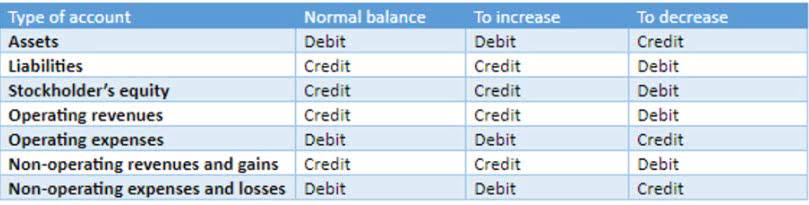
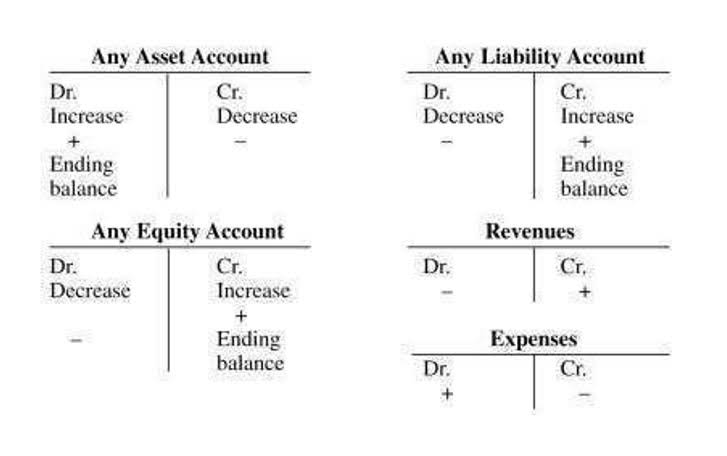
How do you pass an opening entry
Let’s say that a marketer named Elena is looking to expand her agency, but needs to provide some information about retained earnings to attract new investment. Free accounting tools and opening balance equity templates to help speed up and simplify workflows. View historical inventory levels by changing filters to the date range of your choice, filter down to the product or lot level, view status by channel sold on, and more.

How To Calculate Retained Earnings on a Balance Sheet
If there was no physical count, or if the record keeping for a perpetual inventory system is not accurate, then the inputs used for the calculation of inventory purchases are not necessarily correct. This calculation does not work well for the manufacturing sector, since the cost of goods sold can be comprised of items other than merchandise, such as direct labor. These other components of the cost of goods make it more difficult to discern the amount of inventory purchases. They offer deep insights into money coming in and going out, ensuring tight control over finances. It can make businesses run into legal issues or lose money because of not having enough cash. We cover each part of cash flow and highlight necessary changes for correct cash balance.
FAQs About Retained Earnings Calculation
(No offense, accountants.)Essentially, it’s the total income left over after you’ve deducted your business expenses from total revenue or sales. You can find it on your income statement, also known as profit and loss statement. For any business, managing cash flow gets much better with the right cash flow management tools and software solutions. Understanding timing differences helps us see money moving through time. To adjust your cash balance, you add what customers owe but haven’t paid yet.
- Combining specific software solutions with adaptable templates gives businesses clear, useful financial info.
- She supports small businesses in growing to their first six figures and beyond.
- This page explains the basics of beginning and ending balances and how they are used in accounting and Total Office Manager from Aptora.
- Balancing your cash drawer carefully, reconciling regularly, and timing everything right can cut down mistakes.
- We cover each part of cash flow and highlight necessary changes for correct cash balance.

It is calculated by adding any cash or asset additions to the previous ending balance, then subtracting any cash or asset withdrawals from this total. By using the beginning balance formula, you can ensure that all transactions are accurately tracked throughout the duration of your business’s financial cycle. To calculate your beginning cash balance for a cash flow statement, add all of the sums of capital available to your business at the beginning of the period covered by the statement. Include cash in the bank balance sheet and cash on hand, whether these sums came from sales or loans.
- If the company is experiencing a net loss on its Income Statement, then the net loss is subtracted from the existing retained earnings.
- The opening balance is the amount of money in your account at the start of a specific period, usually at the beginning of a month or a financial year.
- And depending on the nature of line items of the financial statements, the balances would either be on the credit side of the debit side of the ledger.
- On the other hand, carried forward and brought forward are often used when the brought forward balance is shown on a new page, such as when the accounts are balanced off at a year end.
- The shortcomings regarding the income statement (and accrual accounting) are addressed here by the CFS, which identifies the cash inflows and outflows over a certain time span while utilizing cash accounting—i.e.
- Balance sheets are documents used to track a company’s assets and liabilities, or, in simpler terms, what it owns and what it owes.
What Is the Formula for Beginning a Cash Balance in a Cash Flow?
- Note that the entry includes a credit to the owner’s equity account to balance the double-entry bookkeeping system.
- By looking at the balance sheet, one can see asset, liability, and equity changes.
- Since the unmet payment obligation represents a future economic benefit to the company, the accounts receivables line item is categorized as a current asset on the balance sheet.
- Understanding the cash flow statement is key for anyone in finance.
- Cash inflows are the funds that come into your business each month, and include income from sales, investments, and loans.
- It’s like a mathematical jigsaw puzzle, where you meticulously piece together all the financial transactions of the period.
The concept of an “opening balance” is key to really getting to grips with the financial health of your business and setting the pace for the year ahead. If we enter those inputs into our WIP formula, we arrive at $25 million as the ending work in progress (WIP), reflecting an increase of $5 million in WIP from the beginning to the end of the period. The ending work in progress inventory roll-forward starts with the beginning balance, adds the manufacturing costs, and then deducts the cost of goods manufactured (COGM). COGM can be determined by adding the total manufacturing costs to the beginning WIP inventory, followed by subtracting the ending WIP inventory. The amount of purchases is less than the cost of goods sold, since there was a net drawdown in Accounting For Architects inventory levels during the period.
